In the relentless current of maritime decarbonization, information is abundant—but actionable intelligence is rare. Regulations evolve, markets shift, and the strategies that defined yesterday's leaders may not secure tomorrow's success.
This hub is more than an archive; it is your strategic compass. Here, we transform complex global mandates from the IMO and EU into clear, commercially-relevant guidance specifically for stakeholders in the GCC region—be you in the UAE, KSA, Qatar, or Oman.
Our curated insights, reports, and analyses are designed for one purpose: to provide you with the foresight and expertise not just to comply, but to compete and lead. Dive in to find the clarity you need to protect your assets, enhance your profitability, and make decisions with confidence on the journey to a sustainable future
Forget distant International Maritime Organization (IMO) ambitions. The European Union (EU) has launched a unilateral regulatory offensive—the Emissions Trading System (EU ETS) and FuelEU Maritime—that has irrevocably changed the cost calculus of global shipping. Coupled with the enforcement of the IMO’s Carbon Intensity Indicator (CII), this triad represents the greatest strategic disruptor since containerization. For the Persian Gulf, the heart of global energy maritime logistics, this is a direct assault on operational profitability and competitive advantage. The time for debate is over. The time for action is now.
Gain a strategic edge with our new publication!
The global maritime industry is undergoing an unprecedented regulatory transformation, driven by the International Maritime Organization (IMO) and the European Union (EU). This transformation is encapsulated by a "regulatory triad": the IMO’s Carbon Intensity Indicator (CII), the EU’s Emissions Trading System (EU ETS), and FuelEU Maritime. Together, these regulations are profoundly reshaping operational costs, asset values, and commercial viability for all vessels, particularly those engaged in critical trade routes between the Persian Gulf nations and Europe.
Traditional charter party clauses, even those recently introduced by industry bodies like BIMCO, are proving increasingly inadequate to address the complex, multi-layered risks inherent in this new decarbonization landscape. Their generalized nature often fails to account for the unique operational realities of Persian Gulf trade – including long-haul voyages, diverse cargo profiles (from crude oil and LNG to containerized goods), and the strategic importance of regional bunkering hubs and transshipment points.
This article argues that bespoke, meticulously drafted contractual solutions are no longer merely advisable but critical for preventing disputes, protecting profitability, and maintaining a competitive edge. It provides a strategic legal guide for drafting advanced charter party clauses that specifically address the allocation of responsibilities, costs, and risks associated with CII ratings, EU ETS liabilities, and FuelEU Maritime compliance. By deconstructing the regulatory framework, analyzing the shortcomings of standard industry clauses for Persian Gulf trade, and offering practical drafting insights and sample language, this guide equips owners, charterers, and legal practitioners with the tools necessary to navigate the contractual battleground of maritime decarbonization effectively and secure their commercial interests in this rapidly evolving era.
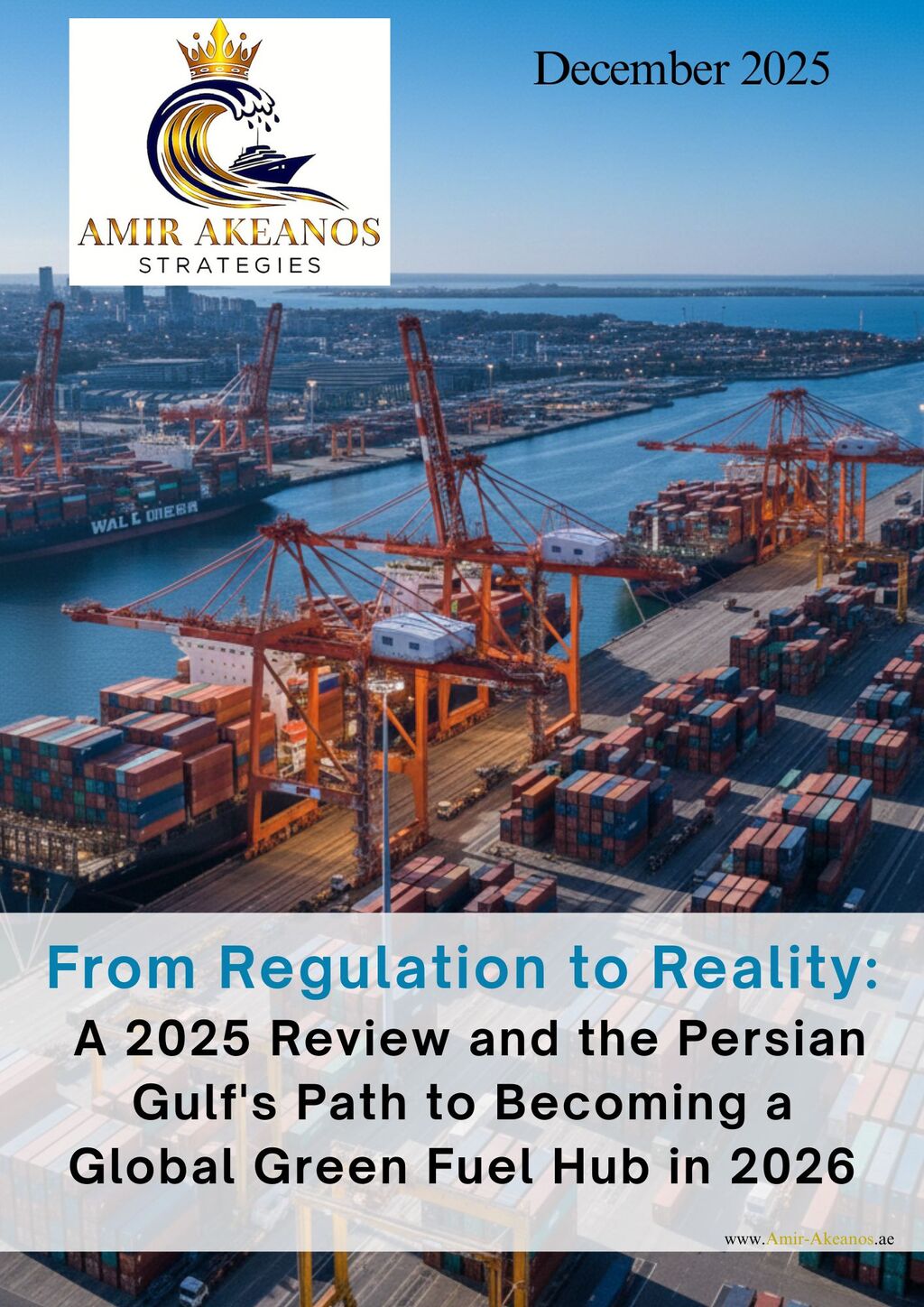
The year 2025 will be remembered as the moment the maritime energy transition moved from the boardroom to the balance sheet. The rhetoric of climate commitment has been replaced by the quantifiable reality of compliance costs and operational constraints. For the Persian Gulf maritime sector—the central artery of global energy and trade flows—this year served as a decisive reality check, exposing vulnerabilities and highlighting a colossal, time-sensitive opportunity. The mandatory inclusion of shipping in the EU Emissions Trading System (ETS) and the tightening thresholds of the IMO's Carbon Intensity Indicator (CII) have officially ended the era of cheap, fossil-fueled complacency. As a crucial pivot point, December 2025 is not just about reviewing losses, but about defining the aggressive strategy needed for 2026 to ensure the Persian Gulf remains a world-leading maritime and energy hub.
The maritime industry has reached a point of no return. As of early 2026, the
regulatory frameworks of the IMO, EU ETS, and FuelEU Maritime have completed their first decisive year of reshaping global shipping economics. For the Persian Gulf, the "Era of Reaction" is over. The strategic imperative for 2026 and beyond is not merely compliance, but global leadership.
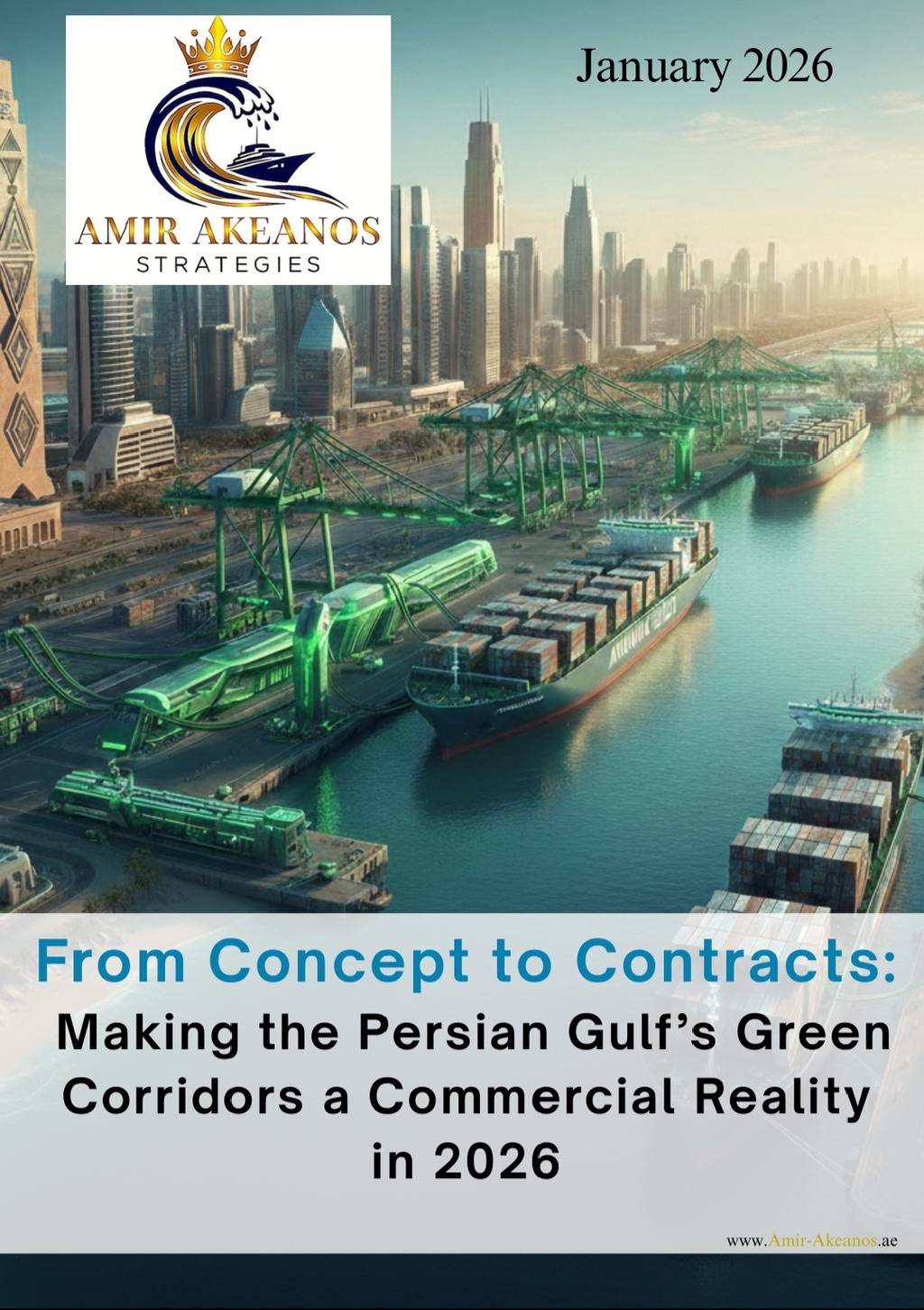
The vehicle for this leadership is the Green Shipping Corridor—a dedicated maritime route where zero or near-zero emission fuels are commercially available and supported by aligned policies. This is no longer a theoretical climate ambition; it is an urgent commercial and geopolitical necessity to preserve the Persian Gulf’s status as the world’s central maritime hub
The year 2026 has become a definitive pivot point for the global maritime industry.
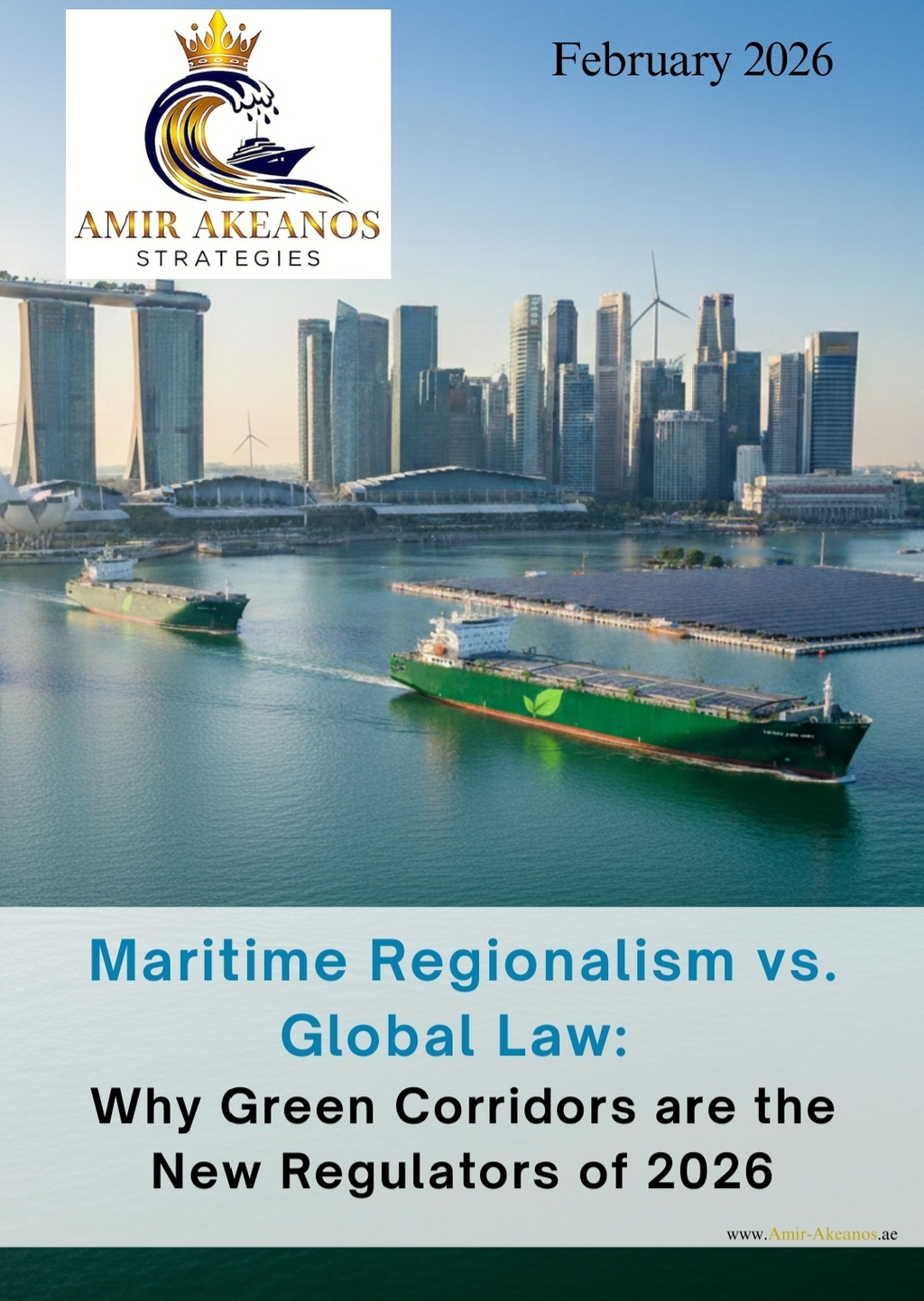
While the International Maritime Organization (IMO) remains the de jure global authority on maritime standards, the gridlock observed during the Marine Environment Protection Committee (MEPC) meetings in late 2025—which resulted in the postponement of the IMO Net-Zero Framework's adoption until October 2026— has created a significant regulatory vacuum.
In this void, a new phenomenon has matured: Maritime Regionalism. Green Shipping Corridors (GSCs), once viewed as experimental "blueprints" for the future, have evolved into decentralized regulatory hubs. By leveraging bilateral and tripartite legal agreements, major port authorities and national governments are no longer waiting for global consensus. Instead, they are enforcing proprietary "green standards" that are effectively reshaping the legal landscape of international trade. This report analyzes the mechanisms by which GSCs are superseding global law and the resulting implications for maritime consultancy and contract law.
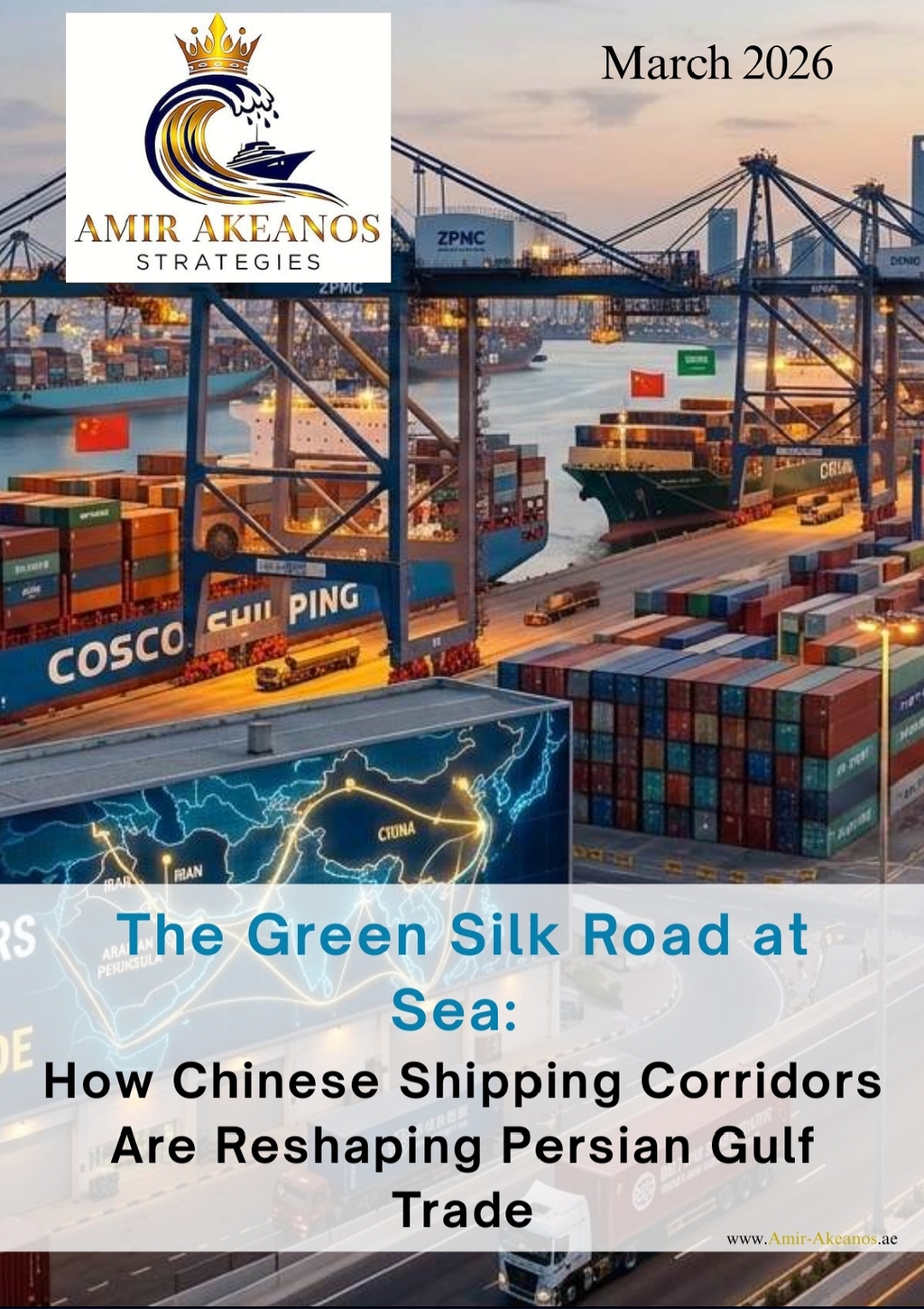
For much of the late twentieth and early twenty-first centuries, the maritime relationship between China and the Persian Gulf was defined by a singular commodity: crude oil, flowing west-to-east. The Persian Gulf was China's filling station; China was the Persian Gulf's most reliable customer. That narrative, while not obsolete, has become incomplete. A new current now runs alongside the old. On October 1, 2025, the ORCHID LEADER—a dual-fuel ro/ro vessel—loaded 1,697 Chinese-made cars at Fuzhou Port and sailed directly for the UAE, Iraq, and Kuwait. Weeks earlier, the Yellow River Mouth had completed a similar voyage, delivering sedans to Abu Dhabi's Khalifa Port—a China-built terminal where green vessels meet green infrastructure.
These are not isolated transactions. They are the visible infrastructure of a strategic transformation. China and the Persian Gulf states are systematically building green shipping corridors: dedicated lanes for low-carbon vessels, optimized by AI and powered by port-side renewables. This is decarbonization through infrastructure, not taxation. This article advances three central arguments. First, the China–Persian Gulf maritime relationship is shifting from unidirectional energy flows to a bidirectional, high-value manufactured goods corridor. Second, this shift is being driven not by state mandates, but by state-aligned commercial enterprises—COSCO, AD Ports, Zhejiang Seaport Group—acting in strategic concert. Third, the green corridor framework, conceived by the IMO and Clydebank Declaration, has been operationalized by Chinese and Persian Gulf actors as a competitive tool: a means of capturing future trade by setting its environmental standards. Drawing exclusively on official announcements from late 2025, the evidence reveals a maritime order in which the "Green Silk Road" is no longer metaphor, but operational reality.
The paradigm of voluntary green finance in the maritime sector has effectively reached its conclusion. By 2026, decarbonization has transitioned from a discretionary corporate social responsibility (CSR) objective into a binding contractual mandate integrated within loan covenants, charter party agreements, and insurance underwriting protocols. The Poseidon Principles have undergone a critical evolution, migrating from a voluntary transparency framework to a de facto prerequisite for capital mobilization. With 36 signatory financial institutions currently controlling approximately 75% of the global ship finance portfolio, the regulatory signal is categorical: climate alignment now constitutes a fundamental 'license to operate' within international capital markets."
The regulatory landscape for shipowners has fundamentally shifted in 2026. The Carbon Intensity Indicator (CII) has entered a new enforcement phase. The EU Emissions Trading System (EU ETS) now requires full coverage of emissions compliance costs. The IMO’s Data Collection System (DCS) has become more granular. And financial institutions are actively enforcing decarbonization covenants.
This article provides a practical, actionable 10-point compliance checklist for the second quarter of 2026. Each action is grounded in current regulatory requirements and verifiable market realities from official sources
On 22 May 2026, the International Maritime Organization (IMO) adopted the first global regulatory framework for Maritime Autonomous Surface Ships (MASS)—a milestone nearly a decade in the making . The new International Code of Safety for Maritime Autonomous Surface Ships (MASS Code) establishes a comprehensive, goal-based framework for remotely controlled and autonomous commercial ships, effective from 1 July 2026 .
This is not an immediate green light for unmanned fleets controlled by artificial intelligence. Rather, the IMO has formally recognized that autonomous and remotely controlled ships constitute their own operational category, requiring specific international rules and no longer mere experimental authorizations . This article analyzes the MASS Code's key provisions, its timeline toward mandatory status, and the legal and commercial implications for shipowners, operators, and the insurance and finance sectors.